Election Focus: AI-Written Comments and Your Contact List
10-14-2026
 Email
to a friend
 Post
a comment
 Print
A Toronto mayoral campaign’s use of an AI-assisted app has raised two questions that apply to every campaign in Canada, including BC’s: who really writes the comments voters see online, and what happens to the phone contacts supporters upload? Here is what has been reported, what is disputed, and what BC voters can do before they vote.
What was reported
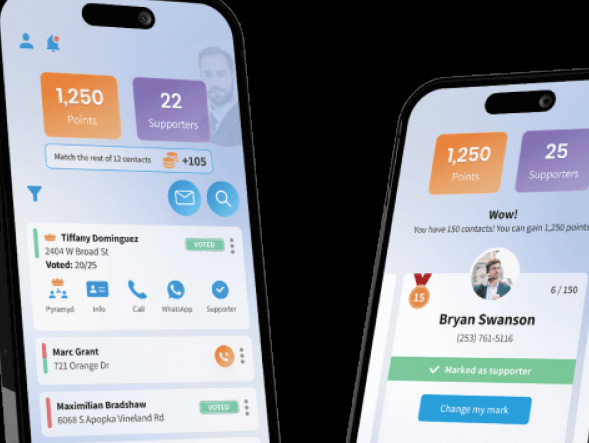
Canada’s National Observer reported on Sept. 21 that Toronto mayoral candidate Brad Bradford’s campaign is using the Victory App, built by the Israeli company LogiVote. The outlet called it the first confirmed Canadian campaign to use the app, and said it learned of an onboarding call from a campaign email in August (National Observer).
According to the reporting, the app sends supporters ‚missions’ to post AI-written comments in support of Bradford on platforms such as Instagram and X. It also rewards users for uploading their phone contacts and rating each one by how strongly they support Bradford. TVO’s analysis adds that the app scans social media for comments about the candidate and generates rebuttals to spread (TVO). NOW Toronto reported that the app rewards tasks with in-app coins (NOW Toronto).
What the campaign says
Bradford’s campaign told CBC News that every comment is reviewed, edited and posted by a real supporter from their own account, and that suggested content is written by campaign volunteers, not AI. Bradford denied that supporters get rewards. “There’s no rewards, there’s no facetime, there’s nothing like that,” he said, CBC reported.
The National Observer’s editor-in-chief wrote that a campaign volunteer, introduced on the onboarding call as one of the campaign’s main contacts, said several times there would be rewards. When the outlet told the campaign it had evidence from the call, the campaign said the volunteer had misspoken (National Observer opinion, Sept. 29). The campaign has since told the Toronto Sun that its points system has no real-world value. The Sun said that statement did not address how AI is used (Toronto Sun).
Not one campaign alone
The Toronto Sun found that Mayor Olivia Chow’s campaign has used NationBuilder, a California-based platform whose features include optional AI tools and a virtual currency campaigns can award to supporters. The Sun said that when it signed up on her website, it was repeatedly prompted to post pre-written messages. Chow’s campaign told CBC it has deactivated NationBuilder’s AI features. The Sun could not tell which NationBuilder features her campaign uses, and NationBuilder did not respond (Toronto Sun).
The practice, not one candidate or one vendor, is what voters should ask about.
A caution about the ‚Israeli app’ label
The National Observer identified the app’s maker as an Israeli company, and some online commentary went further and called the Bradford campaign an influence operation. The Toronto Sun reported that it found no links between the app’s maker, LogiVote, or its parent YayaSoft Group and the foreign-interference operations critics cited. YayaSoft’s CEO denied any government ties and said using AI to help word a sentence “does not turn the person posting it into a bot.”
The nationality of a software vendor is not evidence of wrongdoing. The questions in this article apply to any campaign app from any country.
Why it matters to voters
Comments that look organic may be supplied. When a campaign hands supporters ready-made comments, a thread can look like spontaneous support. A Norwegian research scientist quoted by the National Observer calls this cyborg propaganda: human accounts steered by automated prompts. Voters use online reaction to judge what neighbours think.
Contacts belong to people who never agreed. When a supporter uploads a phone’s contact list and rates each person, the names and numbers of friends, relatives and coworkers go into a campaign database. Those people did not agree to be rated on their politics. Many of us also belong to community groups where phone numbers are visible, which makes this a practical risk and not an abstract one.
What the rules say
•Federal law. Bill C-25, the Strong and Free Elections Act, was introduced on March 26, 2026, and BetaKit reports it has received royal assent. It makes it illegal to create or share a deepfake of a political figure with the intent to mislead. It amends the Canada Elections Act, which governs federal elections only, so it does not apply to municipal or provincial campaigns (bill summary). We found no report that it addresses AI-suggested text posted by real supporters.
•BC. In 2024 BC’s political parties agreed to a voluntary code of practice developed with Elections BC and the province’s privacy commissioner. Parties pledged to avoid impersonating politicians and to avoid presenting AI-generated content as human-made, Policy Options reported. whether the code applies to the 2026 provincial election and to municipal races]
•Elsewhere. Ontario’s chief electoral officer has recommended labelling automated election ads and keeping a public registry of digital ads that notes whether AI was used, the Canadian Press reported.
What BC voters can do
•Be sceptical of comment threads where many accounts post similar, generic praise or attacks.
•Do not upload your phone’s contacts to any campaign app. Check what permissions an app asks for before you accept.
•If you volunteer, ask what the campaign does with the data you give it.
•Report suspected coordinated or automated posting to the platform.
Questions to put to any candidate
1.Does your campaign use AI to draft comments or messages for supporters to post? If so, are supporters told to say so?
2.Does any campaign app ask supporters to upload their contacts? If so, who holds that data, who can see it, and when is it deleted?
3.Do you reward supporters for online activity? What can they earn?
4.Which privacy rules does your campaign follow, and can voters read your policy?
Where this stands
Toronto votes on Oct. 26. [VERIFY] We found no report of a BC campaign using the Victory App, and we do not know what tools BC campaigns use. That is why the questions above are worth asking before Oct. 17 and Oct. 24.
|