Surrey’s New Mosque-Tower: Where Faith, Home, and Community Rise Together
Jafar Bhamji
6-23-2026
 Email
to a friend Email
to a friend
 Post
a comment Post
a comment
 Print Print
After years of prayer in a modest converted house, Masjid Al Noor’s approved 38-storey project signals a bold new chapter for Muslim life in one of Canada’s fastest-growing cities.
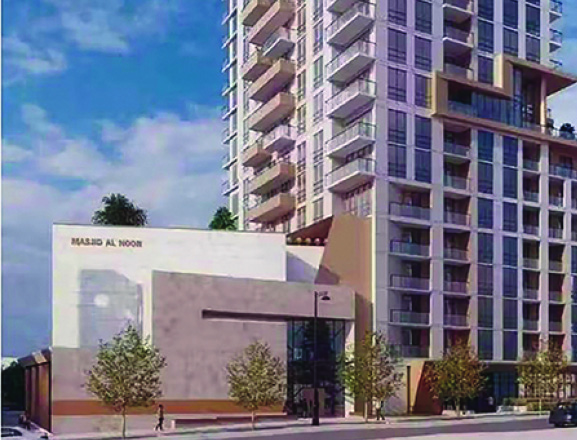
On a warm June evening in 2026, as the sun dipped behind Surrey’s skyline, Janif Mohammed stood before his community with a quiet sense of relief and gratitude. The public hearing at Surrey City Hall had just concluded. After three hearings and hundreds of voices—both supportive and concerned—the council approved Masjid Al Noor’s ambitious vision: a 2,029-square-metre mosque seamlessly connected to a 38-storey residential tower.
For Mohammed, president of Masjid Al Noor, also known as the Mosque of Lights, the moment was more than bureaucratic success. It was the culmination of decades of quiet perseverance by a congregation that had outgrown its humble beginnings. “Alhamdulillah,” he wrote in a thank-you message to the community days later. “We are grateful that it received approval.”
The project at 13508-13546 98A Avenue, near King George SkyTrain Station in Whalley, is no ordinary development. It marries sacred space with everyday living in a way that feels both innovative and deeply rooted in the practical realities of modern Canadian Muslim life.
Roots in a Single-Family Home
Masjid Al Noor’s story begins not in grand architecture but in adaptation. Established in 1994, the mosque originally occupied a 1946-built single-family residence. For over 30 years, families gathered there for daily prayers, Friday sermons, and community gatherings. Children learned Quran, elders found solace, and new immigrants discovered a spiritual anchor in a rapidly changing suburb.
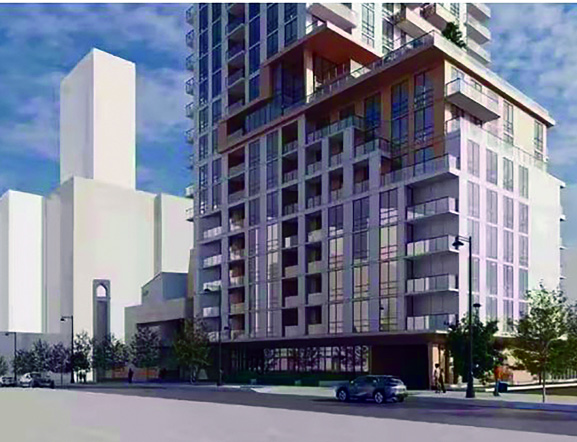
But as Surrey’s Muslim population grew—part of the vibrant diversity that defines one of Canada’s most multicultural cities—the small space strained under demand. The new mosque will accommodate prayers for approximately 2,000 people at once, a significant leap. The connected tower adds 373 residential units (mostly one- and two-bedroom) and underground parking for 332 vehicles plus extensive bike stalls, reflecting the site’s transit-oriented location.
The design thoughtfully orients the mosque toward Mecca, slightly angled relative to the tower. Architect DF Architecture (Group 161) envisioned an “ascending motion” in the massing—stepping volumes at the base, amenity spaces higher up, and a distinctive crown—creating a harmonious blend rather than stark separation.
Voices from the Hearing
Public hearings often reveal the human texture beneath planning reports. Prior to June 15, City Hall received 737 pieces of correspondence in support, nine opposed, and five expressing concerns. Petitions told a similar story: over 2,100 signatures backing the full project.
Supporters spoke of practical faith. One resident highlighted how living in the tower would allow elderly worshippers a short stroll to prayers five times daily, reducing driving and fostering community. Others celebrated the dual contribution to housing supply and places of worship in a city hungry for both.
Concerns were heard too—and acknowledged. Some worried about the tower’s height overshadowing the sacred space or “less room for the pilgrims.” A few opposed blending commercial residential elements with a house of worship. Mohammed’s thank-you letter captured the spirit: “We would also like to acknowledge and thank those who expressed concerns or opposed the project. We respect your views... While we may not always agree, we value the opportunity to hear different perspectives.”
This inclusive tone reflects a broader Canadian ethos of dialogue amid growth. In Surrey, where rapid urbanization meets cultural pluralism, such conversations are common yet vital.
Human Impact: More Than Bricks and Mortar
For families like those who have prayed at the current Masjid Al Noor since the 1990s, the project promises transformation. Imagine a young professional returning from work at King George Station, stopping at the mosque for Maghrib prayer before heading to their apartment upstairs. Or grandparents living in the tower, walking easily to Jummah with grandchildren.
The mosque’s vision extends far beyond worship. Plans include education programs, charitable initiatives, youth and family activities, and community services. It aims to be a hub that serves not only Muslims but the wider neighbourhood—echoing the Islamic tradition of mosques as community centres.
School projections add another layer: the Surrey School District anticipates about 31 school-age children from the tower, with many attending local public schools. This integration underscores how the project weaves into the fabric of Surrey life rather than standing apart.
Broader Significance in Canadian Context
In many ways, Masjid Al Noor’s approval mirrors Canada’s evolving story of immigration, faith, and urban development. Muslim communities across the country have long navigated zoning challenges, parking debates, and neighbourhood concerns to establish places of worship. Here, the innovative mosque-tower hybrid addresses those very issues creatively: shared infrastructure, transit proximity, and ample parking (151 stalls for the mosque alone, exceeding minimums in this Tier 2 area).
Staff supported the project despite some policy deviations on density and land use, noting its alignment with housing goals and the value of places of worship. In a province and nation facing housing shortages, pairing residential density with community infrastructure feels pragmatic and forward-thinking.
The project also highlights interfaith and intercultural dialogue. By inviting all community members to participate in building an inclusive space, Masjid Al Noor positions itself as a bridge-builder in Whalley, an area undergoing significant change near Holland Park and the Expo Line.
A Legacy for Generations
As construction moves forward, the human stories will multiply. There will be the volunteers who helped during hearings, the families dreaming of new homes, the youth envisioning programs in the expanded space, and the elders who remember the modest house that started it all.
Janif Mohammed captured it best: “Together, we are building a stronger, more welcoming Masjid Al Noor for generations to come.”
In Surrey, this isn’t just another high-rise or another mosque. It’s a living testament to what’s possible when faith meets foresight, when community voices shape development, and when a city embraces the full diversity of its people. In an era of division, projects like this remind us that sacred spaces and shared homes can rise side by side—strengthening the bonds that hold a multicultural society together.
The minarets and balconies may look modern, but the spirit is timeless: a place to pray, to live, to belong.
|