Speaking Up, Losing Work
Jafar Bhamji
10-14-2026
 Email
to a friend
 Post
a comment
 Print
Political expression, workplace consequences and the questions B.C. institutions must answer
When British Columbians speak publicly about Gaza and Palestinian rights, where does personal political expression end and an employer's legitimate concern begin?
For some workers and community leaders, this has become more than a theoretical question. Public complaints about social media posts, expressions of solidarity and political statements have been followed by lost positions, contested dismissals and restrictions on workplace symbols.
These cases are not identical. Nor do they establish that every institutional decision was discriminatory or unlawful. But they raise questions particularly relevant to Muslim and Palestinian communities: Are rules clear? Are complaints investigated fairly? Do people have an opportunity to respond? And are comparable political views treated consistently?
Three B.C. workplace controversies
Northern Health: Amy Blanding
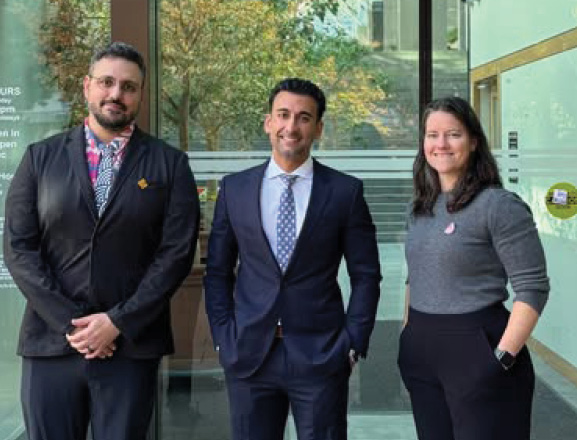
In 2024, Amy Blanding, then leading Northern Health's inclusion, diversity, equity and accessibility work, faced complaints after a personal musical performance and social media comments about Gaza. She was removed from her leadership assignment and later resigned. In October 2024, she sued, alleging constructive dismissal, defamation and infringements of her rights.
Northern Health denied wrongdoing. It said it investigated concerns under its policies, that Blanding's leadership appointment was temporary and that her conduct raised questions about public confidence in its services.
These are competing accounts, not established findings. A final judgment or the current disposition of the lawsuit could not be verified.
The BC Civil Liberties Association (BCCLA) publicly supported Blanding. Its then-president, Hasan Alam, described the case as an example of the "growing chill on free expression in this province and across the country."
Vancouver Coastal Health: Hayf Abichahine
In reporting published by The Tyee, Hayf Abichahine, a Lebanese-Palestinian equity and inclusion director, said he lost his job in 2024 after complaints about personal pro-Palestinian posts.
He disputed allegations of antisemitism and said he had agreed to remove contested posts.
He reported reaching a settlement with Vancouver Coastal Health, without disclosing its terms. The health authority did not respond to The Tyee before publication.
His account illustrates the professional stakes, but a settlement is not a finding of wrongdoing.
Vancouver Public Library: Palestinian symbols
In March 2025, staff and supporters challenged workplace restrictions involving Palestinian symbols, including watermelon pins and keffiyehs.
The library said employees were expected to maintain impartiality on political issues while performing their duties, except where positions were endorsed by its board.
BCCLA criticized the restriction and questioned its compatibility with protections for political belief.
This was a dispute over workplace rules, not a documented mass dismissal.
In a separate March 2025 statement, BCCLA expressed concern about what it characterized as widespread suppression of political expression supporting Palestinian rights, including professional discipline, lost opportunities and censorship.
That is the association's assessment, not a legal finding against the institutions discussed here.
Political organizations face questions too
In October 2023, Gul Gulsen resigned as a BC United executive-board secretary following controversy surrounding her comments about a Gaza hospital explosion.
Political opponents accused her of defending Hamas. Gulsen rejected that characterization and said her concern was for Palestinian civilians.
Subsequent defamation allegations were reported by The Tyee. This was a political-party board resignation, not evidence that she lost paid employment because of those posts.
Other controversies involving Palestinian solidarity have arisen across Canada, including in newsrooms and at demonstrations. Their legal and professional circumstances differ.
What does the law protect?
British Columbia's Human Rights Code expressly protects political belief in employment, alongside religion, race, ancestry and place of origin.
That protection can extend to advocacy about public policy, not only membership in a political party. However, it does not mean every controversial statement is exempt from workplace rules or that every disciplinary decision is unlawful.
The Canadian Charter of Rights and Freedoms protects expression against government action, subject to legal limits. Its application to particular employers or institutions can be complex. Employment agreements, professional obligations and human rights law may also be relevant.
For employees, a central question is whether political belief was a factor in an adverse employment decision.
For employers, the question is whether an intervention rests on applicable, consistently enforced rules and a fair assessment of actual conduct.
What should institutions do?
Employers have a responsibility to address harassment, antisemitism, Islamophobia and anti-Palestinian racism.
They may need to respond to threats, discrimination or conduct that genuinely undermines professional responsibilities.
However, criticism of a state or its policies is not, by itself, proof of hatred toward a religious or ethnic community.
Fairness requires more than reacting to the loudest complaint.
Institutions should provide written rules, distinguish personal speech from official statements, assess words and context, allow individuals to respond, explain decisions and provide meaningful review procedures.
With local and provincial elections approaching, candidates can be asked whether municipal bodies, school districts, health authorities and political parties have credible complaint procedures.
Elected representatives cannot determine the outcome of individual legal disputes. They can, however, seek transparency and accountability within the institutions they oversee.
Community organizations also have a role: educating members about their rights, providing referrals to qualified advisers and supporting open discussion without expecting everyone to share identical political views.
Anyone facing disciplinary action should preserve relevant records and seek timely legal advice. B.C. human rights complaints generally have a one-year filing deadline.
The central issue is not whether every political statement deserves agreement. It is whether disagreement is handled through clear standards, credible evidence and fair treatment.
Those protections matter most when an opinion is unpopular.
This column examines documented events, public statements and differing viewpoints. Allegations are not findings of wrongdoing. The legal information is general and does not constitute legal advice.
Footnotes: Picture: BC Civil Liberties Association President, Hasan Alam with Amy Blanding
|