| |
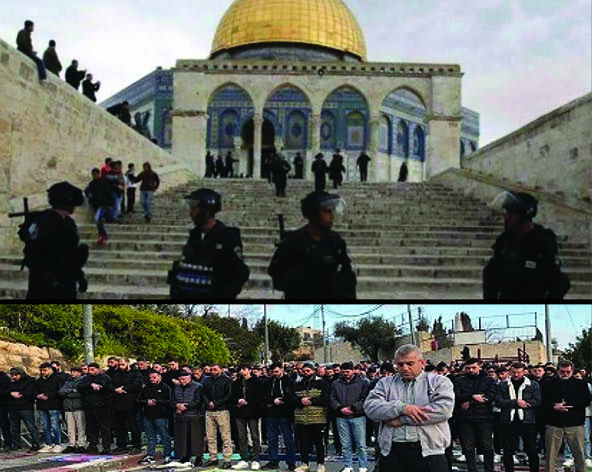
The Silent Eid at Al-Aqsa Mosque: First Eid Since 1967 Without Prayers Inside Al-Aqsa
3-25-2026
 Email
to a friend Email
to a friend
 Post
a comment Post
a comment
 Print Print
In an unprecedented and deeply unsettling development, Palestinian worshippers were barred from performing Eid-ul-Fitr prayers at Al-Aqsa Mosque—marking the first such closure since 1967. The decision transformed what is typically a day of spiritual unity and celebration into one of silence, restriction, and profound grief across Jerusalem.
From the early hours of dawn, heavily armed Israeli forces sealed all major entrances to the mosque compound, preventing thousands of worshippers from accessing one of Islam’s holiest sites. Instead of gathering within its historic courtyards, many Palestinians were forced to perform Eid prayers on cold streets and near locked gates outside the Old City walls. The echoes of “God is Greatest,” usually heard from within the sanctuary, were displaced to alleyways and checkpoints—symbolizing a stark rupture in religious tradition.
Authorities have framed the closure as a “security measure,” citing regional tensions, particularly involving Iran. However, Palestinian officials and religious leaders have condemned the move as a deliberate and dangerous escalation. The Jerusalem Governorate described it as a direct assault on religious freedom and an attempt to alter the long-standing status quo of the sacred site. Meanwhile, international bodies such as the Organization of Islamic Cooperation and the African Union have voiced strong objections, calling the closure a violation of historical and legal protections afforded to Islamic holy places.
For many, the pain of this Eid was intensified by proximity. Worshippers stood within sight of the Dome of the Rock, yet were denied entry into its sacred precincts. Religious leaders, including Sheikh Ekrima Sabri, issued urgent calls for steadfastness, urging believers to maintain their presence by praying at the closest accessible points—a symbolic act of spiritual resilience in the face of restriction.
Beyond Jerusalem, the impact reverberated across the Muslim world, particularly in the Gaza Strip, where Eid unfolded under the shadow of destruction. Amid the ruins of more than 1,100 damaged or destroyed mosques, families gathered in open spaces and shattered neighborhoods to mark the holiday. The sounds of celebration were subdued, often interrupted by drones and distant airstrikes. Yet, even in devastation, acts of faith endured—families shared what little they had, children played among rubble, and communities came together in prayer.
Reports indicate that for over 20 consecutive days leading up to Eid, access to Al-Aqsa had already been severely restricted, particularly during the final nights of Ramadan. Many international visitors, including British Muslims who had traveled for the last ten nights, found themselves stranded—unable to fulfill their spiritual journey.
As night fell on this somber Eid, solidarity gatherings emerged in cities worldwide, from London to Istanbul, reflecting growing global concern. The central question now looms large: is this closure a temporary measure tied to current tensions, or the beginning of a more permanent shift in control over one of Islam’s holiest sanctuaries?
For millions, this Eid will be remembered not for its joy, but for its silence—an absence that speaks volumes about faith, occupation, and the enduring struggle for religious freedom.
|